Create Wiki · Kinetics
Encased Chain Drive and Adjustable Chain Gearshift
The Encased Chain Drive links shafts side by side: every block in a row turns together, the same way and at the same speed. Its sibling, the Adjustable Chain Gearshift, changes that ratio with redstone: it doubles the speed of the rest of the row, or halves its own, and an analog signal sets anything in between.
Quick facts
- Category
- Kinetics
- Row
- Every drive in a row turns the same way at the same speed
- Orientation
- Each block in the row can be turned 90° (Wrench)
- Unpowered Gearshift
- Behaves like a normal Chain Drive
- Powered Gearshift
- Ratio 1 + (signal + 1) ÷ 16: ×2 at strength 15, ×1.56 at strength 8
- At the source
- The other drives turn faster (×2 at full strength)
- Elsewhere
- It turns slower (÷2 at full strength)
- Version
- Create 6.0.8 · Minecraft 1.21.1
Crafting table recipe (shapeless)
→ 1 Encased Chain Drive
A row of drives
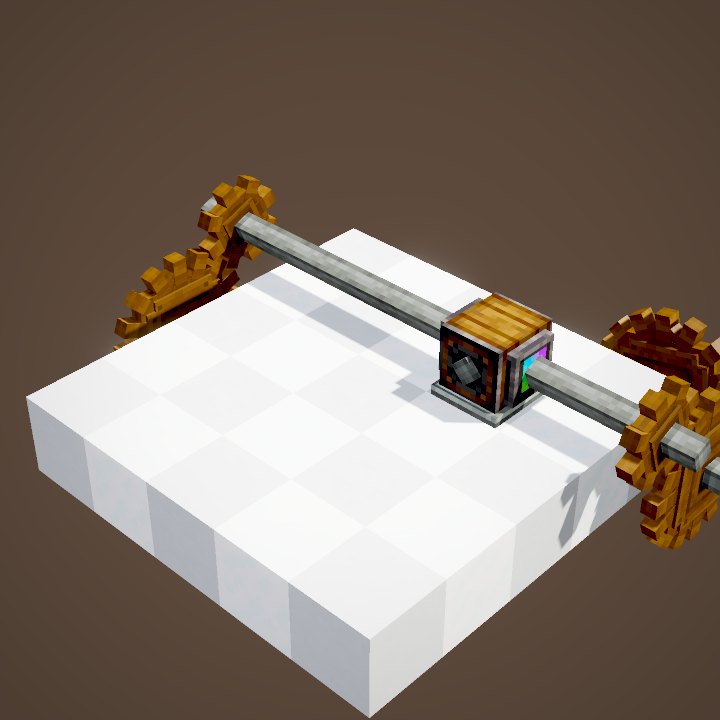
Place the drives side by side: they link up on their own, from the first block to the last. Rotation goes in through one block's shaft and comes out through any other's. Handy to shift a line of shafts sideways without cogwheels.
Building a row
Drives link up when their axes are parallel and they follow each other side by side. The row can bend when a block is turned with the Wrench. Each block has a shaft on either side of its axis, where shafts or machines plug in.
Same direction, same speed
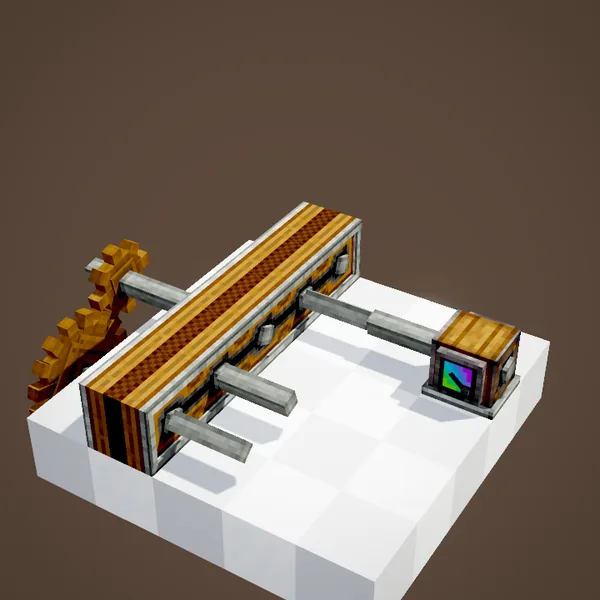
Unlike two meshing cogwheels, a chain does not flip the direction: every shaft hooked to the row turns the same way. Here two shafts added on the side spin at the source speed.
A block can be turned
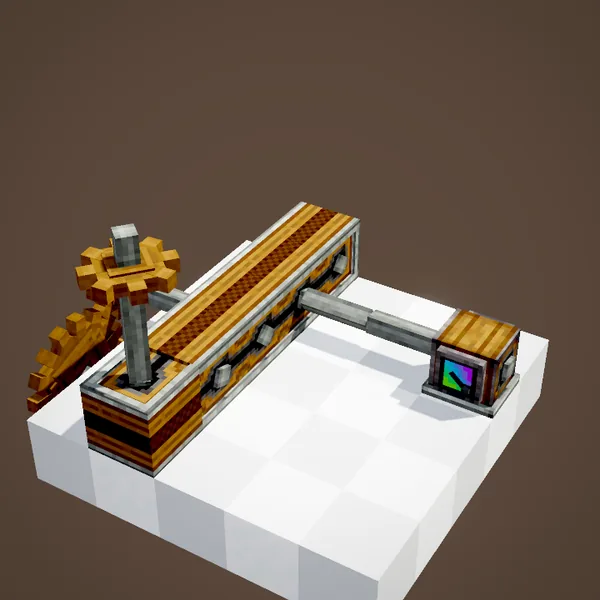
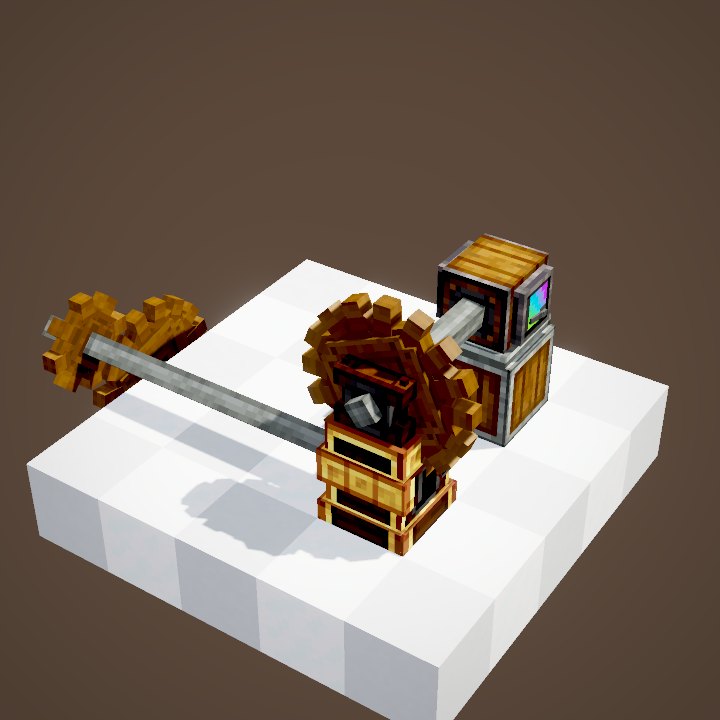
Each block in the row can be turned 90°: its shaft then points up or down and the row stays linked. The loop ends on a vertical shaft and a cogwheel driven that way.
The unpowered Adjustable Chain Gearshift
With no signal, the Adjustable Chain Gearshift is a drive like the others: all three Speedometers show the source speed.
Powered at the source: everything runs twice as fast
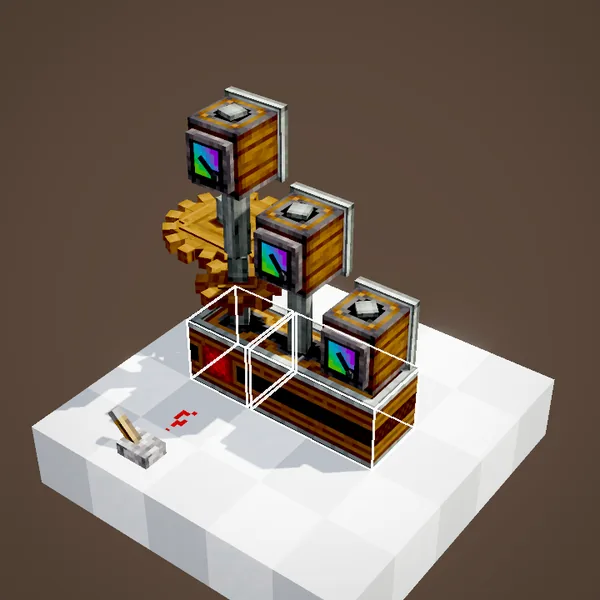
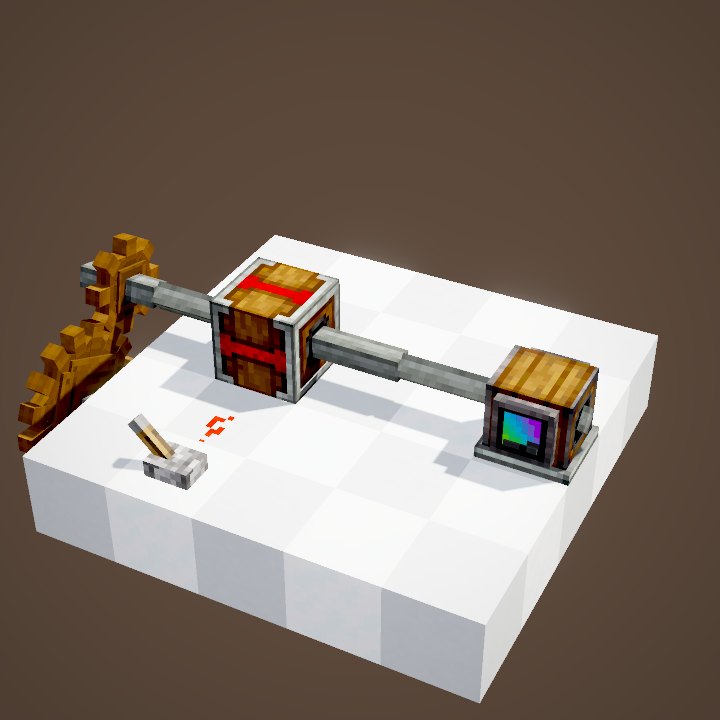
When rotation comes in through the gearshift and it gets a strength-15 signal, the other drives in the row turn twice as fast as it does. The gauges show it: the source does not change, the rest doubles.
Elsewhere in the row: it runs at half speed
If the gearshift is not the block receiving the rotation, the signal does the opposite: it is the one that slows down, to half the row's speed. Here the row was rebuilt with the gearshift at the far end.
The rule to remember
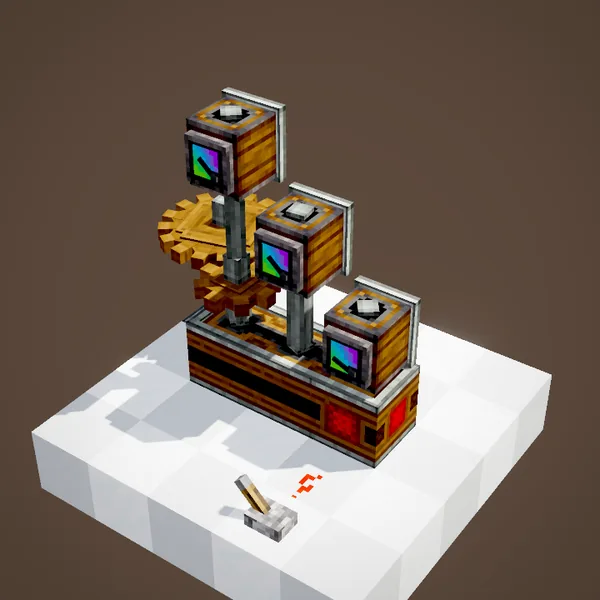
Either way, the plain drives always turn twice as fast as a fully powered gearshift. The code computes the ratio between the two blocks, hence a doubling on one side and a half on the other.
Fine-tuning with an analog signal
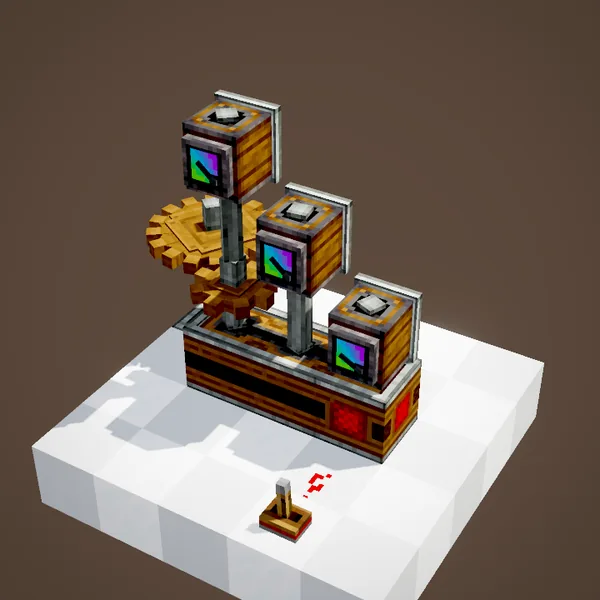
The ratio is 1 + (signal + 1) ÷ 16. With an Analog Lever set to 8, it becomes about 1.56. The loop shows that in-between speed on the last gauge.
What about stress?
A chain drive uses no stress itself, but doubling a row's speed doubles what the machines on it cost. Before powering an Adjustable Chain Gearshift, check your source's headroom on a Stressometer.
Common mistakes
Two rows touching side to side do not link: only drives lined up the same way form a row. And doubling the speed also doubles the stress of the machines at the end of the line.
What the loops show
The Speedometers show the values recomputed by our simulation, analog ratio included. When the first row is taken away, the shafts above stop until the new row arrives: that is what happens in game when you break the chain. Each gauge reads the speed of the shaft it sits on.
On our server
On Create France, chain drives are the most compact way to bring rotation from one floor to the next in a tight factory.
Related pages
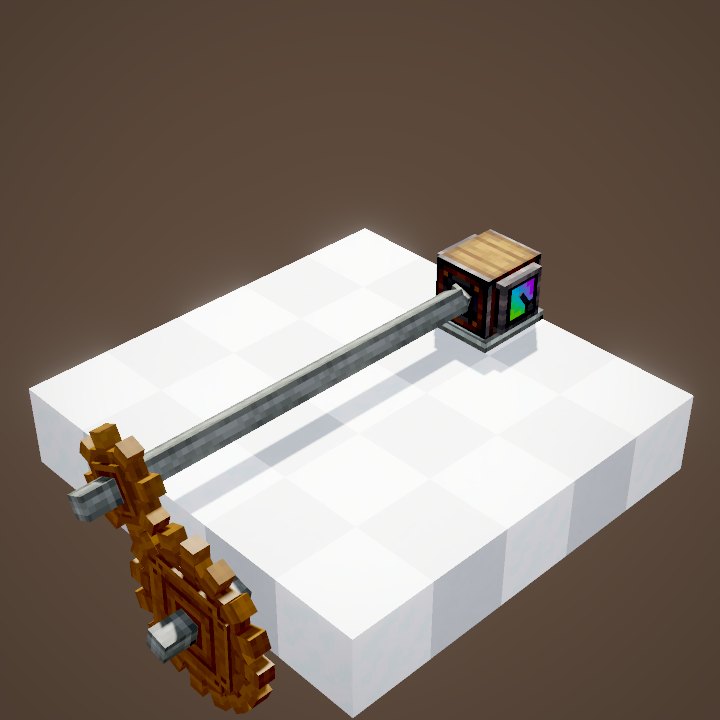
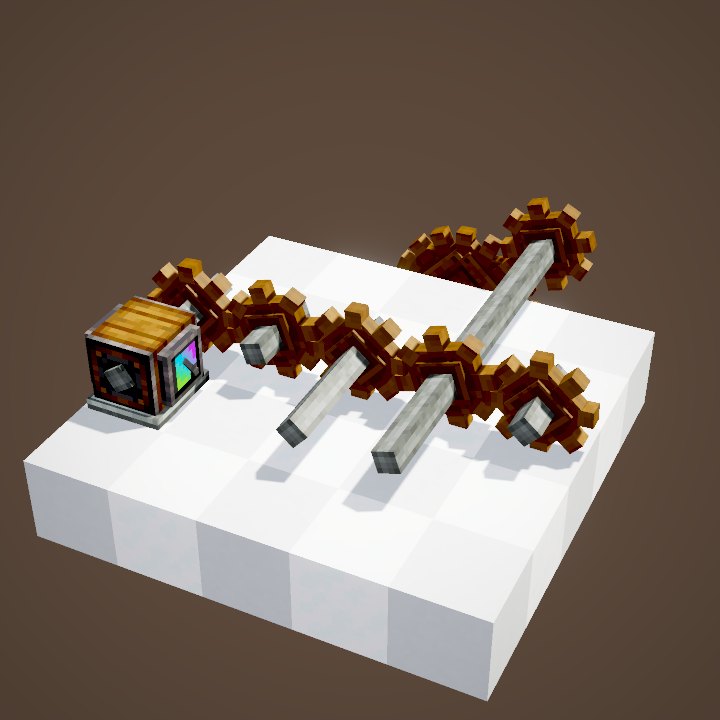
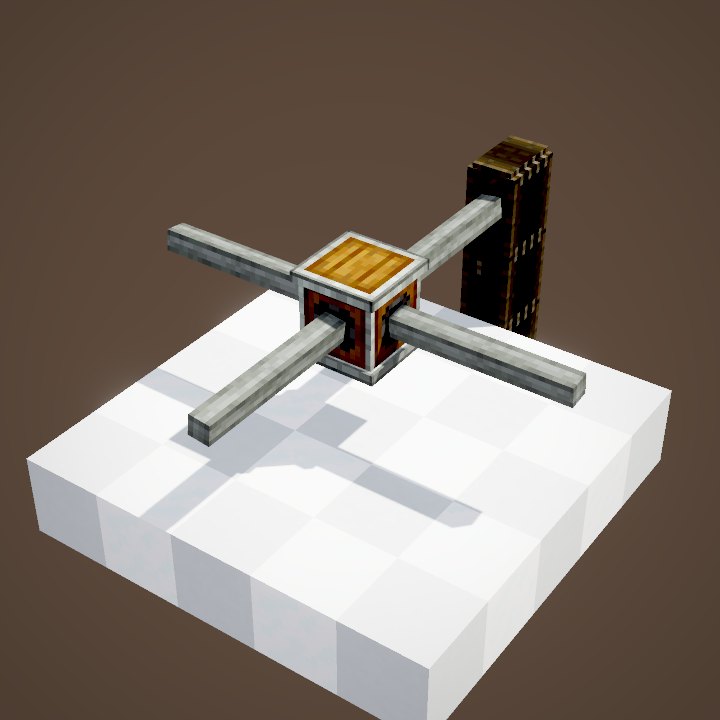
Sources for the numbers (Create 6.0.8 code)
- Recipes: crafting/kinetics/encased_chain_drive.json, adjustable_chain_gearshift.json (+ Electron Tube)
- Row and orientation: ChainDriveBlock (Part START / MIDDLE / END, areBlocksConnected), ChainDriveBlock.getRotationSpeedModifier
- Ratio: ChainGearshiftBlockEntity.getModifierForSignal (1 + (signal + 1) / 16)
- Simulation: WIKI/redstone_sim.py (signals, delays, links, latches and speeds recomputed tick by tick from Create's and Minecraft's code; only the player's actions come from the scene)
- Scenes: ChainDriveScenes.chainDriveAsRelay, adjustableChainGearshift (42 s split into two loops)
Original texts and animations by Create France, rendered from the mod's Ponder scenes. Create is a mod by the Create Team, not affiliated with Create France.